
A series of recent studies focused on CO₂ conversion have highlighted a type of artificial leaf designed to produce clean fuel through photochemical processes. This technology is powered by sunlight and organic components, opening up a new scenario for the transformation of resources and the production of chemical inputs. The work compiles results obtained after years of experimentation with devices capable of replicating natural mechanisms. Scientific exploration positions clean fuel as an energy vector with potential applications in different sectors, while analysing its implications for a less carbon-dependent economy.
How does the solar device that converts CO₂ into clean fuel work?
The recent development of an artificial leaf created by the University of Cambridge reproduces the behaviour of photosynthesis and generates formate, a type of clean fuel derived from the combination of carbon dioxide, light and water. The study was published in the journal Cell, where its functioning as a bio-hybrid system formed by organic semiconductors and enzymes from bacteria is detailed. These structures allow the device to operate autonomously and maintain stable performance without chemical additives.
The team led by Professor Erwin Reisner has spent more than a decade perfecting methods of artificial photosynthesis geared towards alternative energy sources. In this version, operational stability exceeds 24 consecutive hours, an achievement made possible by the incorporation of an auxiliary enzyme housed in a porous titanium matrix. This technical adjustment prevents the rapid degradation of catalysts and facilitates the use of simple bicarbonate solutions as a reaction medium. Laboratory tests show that electrons are redirected with high efficiency to the reactions that generate formate. The resulting compound was integrated into a subsequent reaction to synthesise products used by the pharmaceutical industry without additional waste. According to the study, this is the first time that organic semiconductors have performed the function of light capture in a bio-hybrid system with these characteristics.

Applications of this clean fuel and its industrial potential
The production of formate offers a distinct operating model for the manufacture of chemical inputs. This type of clean fuel can be used as a starting point in synthesis chains that require an emission-free energy base. In addition, the selectivity of bacterial enzymes prevents the occurrence of competitive reactions that make it difficult to obtain pure compounds. Researchers point out that the chemical industry accounts for about 6% of global emissions and relies heavily on petroleum-derived inputs.
In this context, an autonomous system that converts CO₂ into a usable fuel can reduce pressure on fossil resources and simplify processes that currently require short-lived inorganic catalysts or materials with toxic elements. Among the notable innovations is the integration of organic semiconductors as light absorbers. This technical decision allows their properties to be adjusted and reduces the use of components that generate complex waste. The absence of by-products also facilitates the adaptation of the device to future variants capable of producing different chemical compounds with the same operating principle.
Technical innovations for more efficient solar conversion
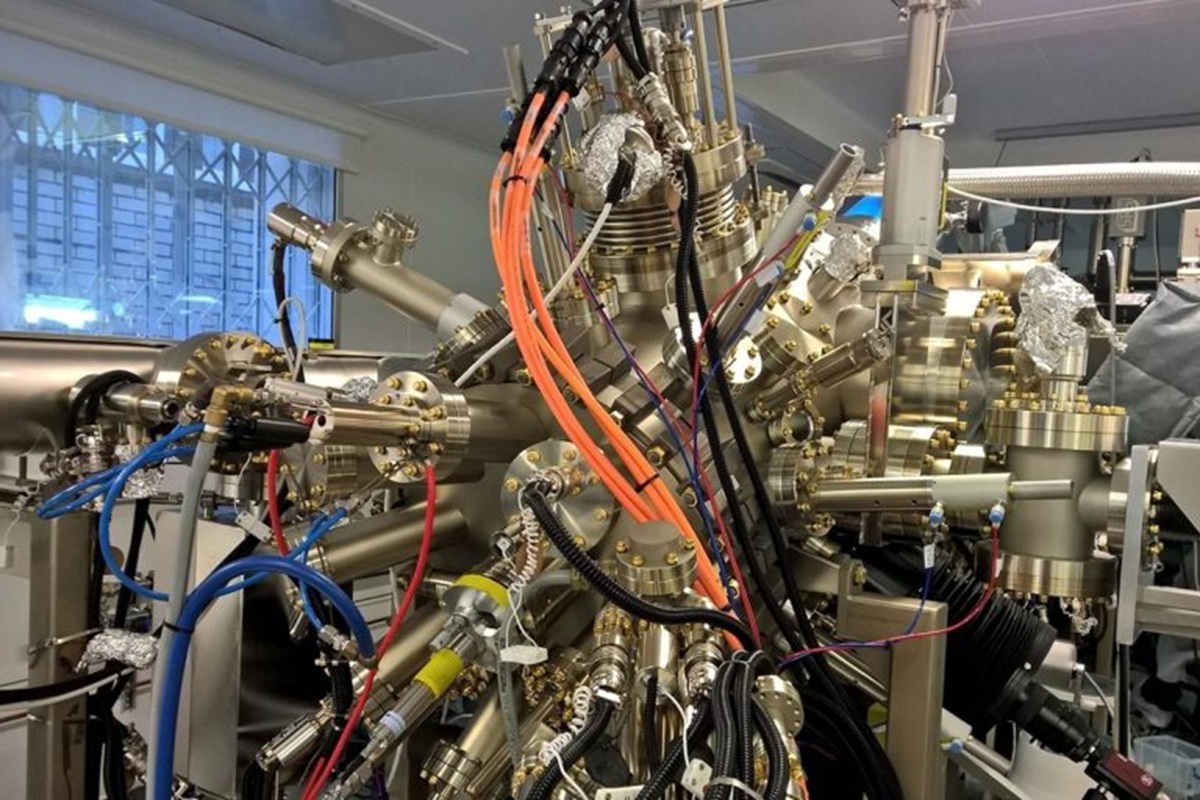
Another line of research, reported by MIT Technology Review, details a solar device capable of transforming carbon dioxide and water into hydrocarbons such as ethylene and ethane using copper structures developed by Peidong Yang’s laboratory at the University of California, Berkeley. These formations, described as metallic “flowers”, act as catalysts where electrons accumulate to drive molecular conversion.
The system uses silicon nanowires to capture light and operates with glycerol instead of water, which increases the efficiency of electron use and gives rise to by-products such as glycerate, lactate, or acetate. These compounds have applications in the cosmetic and pharmaceutical sectors, giving them a complementary industrial dimension. However, several experts warn that current yields are not sufficient for large-scale implementation. The durability of the catalysts and the stability of the process are elements that require optimisation before their incorporation into production infrastructures can be considered.
What does the future hold for solar conversion into clean fuel?
The teams responsible for developing these technologies maintain that capturing CO₂ from the air or from power plants could enable the generation of clean fuel with a neutral carbon balance. This would make artificial photosynthesis a useful tool for industrial processes that require chemical inputs without resorting to fossil raw materials.
Researchers predict that, with more precise design techniques and new approaches to stabilising enzymes and organic semiconductors, it will be possible to extend the useful life of these devices. They also propose adapting them to generate different compounds according to sectoral needs, which would open up options for chemical refineries based on renewable resources.