
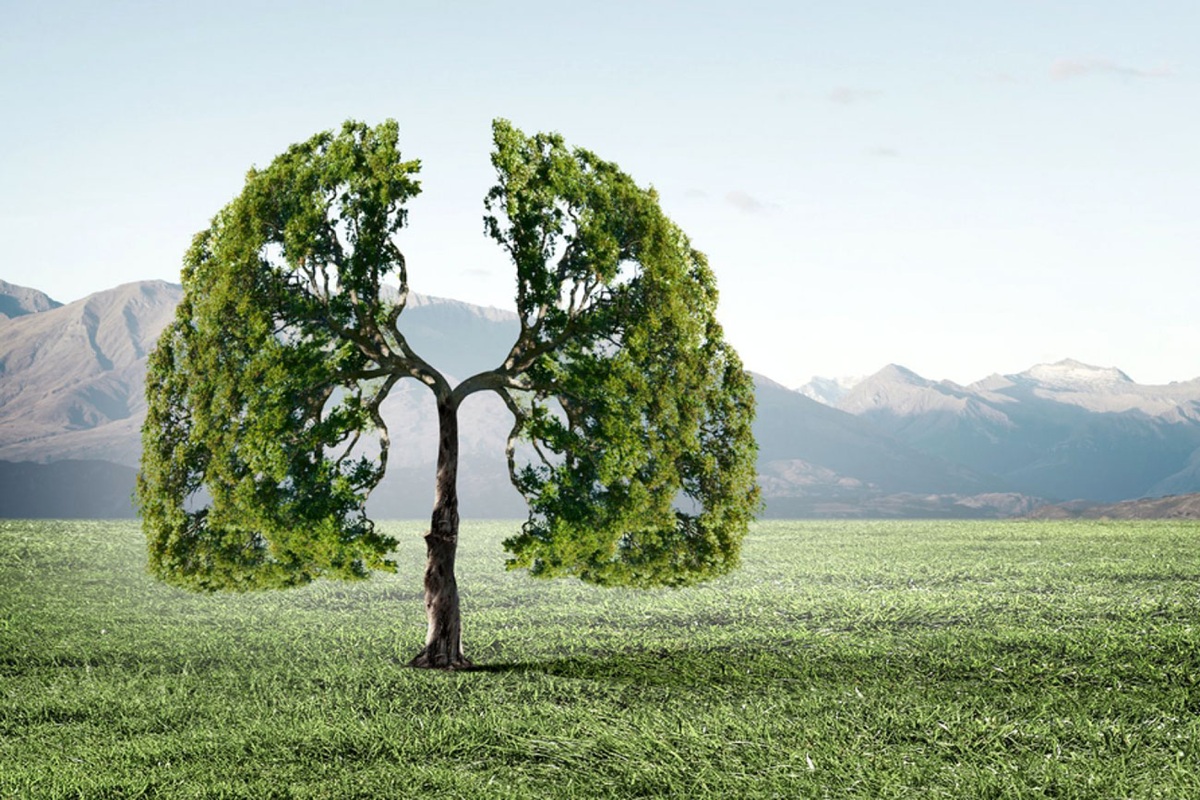
Africa loses its role as a carbon sink: deforestation transforms its forests into a net source of CO₂, with an annual loss of 106 billion kg of forest biomass.
- African forests shifting from sink to source.
- Accelerated biomass loss after 2010.
- Pressure from deforestation, fires and agricultural expansion.
- Satellite technology revealing invisible patterns.
- Growing risks to climate, biodiversity and rural communities.
- Urgent need for funding and forest governance.
African forests no longer absorb carbon: an unexpected turnaround with global consequences

New research warns that Africa’s forests, historically allies in climate change mitigation, have ceased to act as carbon sinks and have become net emitters. The study, published in the journal Scientific Reports and led by teams from the National Centre for Earth Observation at the universities of Leicester, Sheffield and Edinburgh, confirms a turning point that is worrying the scientific community. The study points out that the trend changed after 2010, just when many countries were intensifying agricultural expansion, logging and the opening of new infrastructure. This change coincides with a growing international interest in strengthening forest protection, a central theme of the recent COP30 held in Brazil.
How changes in forests were measured
The team used high-precision satellite data combined with machine learning algorithms to reconstruct more than a decade of variations in above-ground biomass, i.e., the carbon stored in trees and shrubs. The technology used — including NASA’s GEDI space laser and Japan’s ALOS radars — made it possible to detect even localised losses of tree cover that previously went unnoticed.
While the continent was still gaining carbon between 2007 and 2010, the trend reversed abruptly. Between 2010 and 2017, Africa lost about 106 billion kilograms of biomass per year, a figure equivalent to the weight of about 106 million cars. The losses are concentrated in the tropical rainforests of countries such as the Democratic Republic of Congo, Madagascar and several West African states. Savannah areas, where shrub vegetation grows relatively quickly, have seen gains, but these are insufficient to offset the destruction of mature forests. In practice, the continent no longer retains CO₂, it expels it.
Implications for climate policy
Professor Heiko Balzter, director of the Institute for Environmental Futures at the University of Leicester, sums up the gravity of the discovery: if African forests cease to absorb carbon, other territories will have to reduce their emissions even further to keep alive the goal of limiting global warming to 2 °C. There is no margin for error.
This turnaround comes at a time when COP30 countries have agreed to launch the new Tropical Forests Forever Facility, a mechanism designed to mobilise billions to support forest countries in keeping their forests intact. The idea is simple but powerful: pay to keep forests standing.
The map generated by the research — the most detailed to date for Africa — provides an accurate snapshot of where biomass is being lost and at what rate. This information is critical for targeting climate funds more effectively, evaluating conservation projects and improving transparency in carbon markets.
Calls for stronger forest protection
Co-author Nezha Acil points out that forest governance remains weak in large areas of the continent. Illegal logging, a lack of personnel to monitor remote areas and the absence of sustainable economic alternatives continue to fuel degradation.
Initiatives such as AFR100, which aims to restore 100 million hectares by 2030, represent an important step, but they need regional coordination and stable funding. Restoration is not just about planting trees: it involves respecting local dynamics, restoring degraded soils and ensuring that communities are better off with the forest than without it.
Researcher Pedro Rodríguez-Veiga, currently with the company Sylvera, adds a key element: the study provides essential data for the voluntary carbon market, where a lack of transparency has raised doubts about the credibility of some projects. If Africa becomes a net source of emissions, global offset strategies will be called into question. And climate targets will become even more distant.
What impact could this have on the environment?
The loss of forests in Africa does not only affect the climate. It pulls a thread that unravels multiple systems:
- Biodiversity: unique species — many of them endemic — are losing their habitat at a rate they cannot keep up with.
- Water cycle: fewer trees means less moisture retained in the soil and less local rainfall, something that is already affecting regions of the Sahel.
- More intense fires: degradation generates dry fuels and fragments the forest, which multiplies the risk of serious fires.
- Rural communities: forest loss reduces resources such as firewood, wild foods and medicinal plants, making families more vulnerable.
- Soil erosion: when tree cover disappears, the soil decomposes and loses fertility. It is bread for today and hunger for tomorrow.