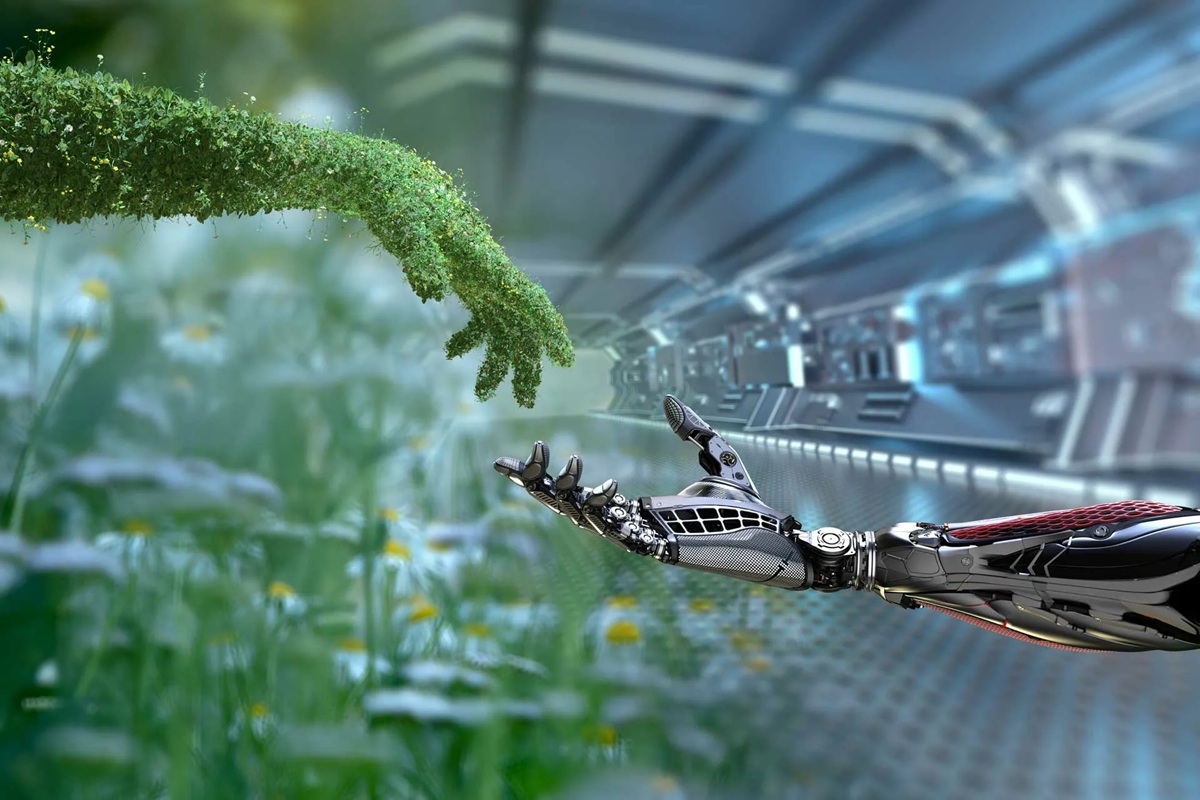
Until recently, the idea that a plant could power a machine or that a mushroom could function as a robot’s brain seemed like something out of a science fiction novel. However, hybrid robotics, a field that combines biology and technology, demonstrates that the boundary between the living and the mechanical may be much more blurred than we thought. Today, engineers, biologists and artists work side by side on projects in which plants, mushrooms and even bacteria are not mere accessories, but important components of the system. These living beings are not just for decoration: they provide movement, sensitivity, energy and even “decisions”. In other words, machines are beginning to gain a little life.
The birth of hybrid robotics
For decades, traditional robotics was built on a rigid foundation: metal, plastic, schematics and code. But in recent years, a softer, more organic direction has emerged: soft robotics. Inspired by nature, this discipline seeks materials that bend, adapt and react like living tissues. Hybrid robotics goes even further. It is no longer about imitating biology, but integrating it. One of the first examples came from the University, where a group of scientists managed to create an artificial leaf powered by real plant cells. These cells reacted to light and moisture, producing movements that were transformed into mechanical actions. It was a mixture of science and poetry: a machine that moved thanks to life.
Plants that “control” robots
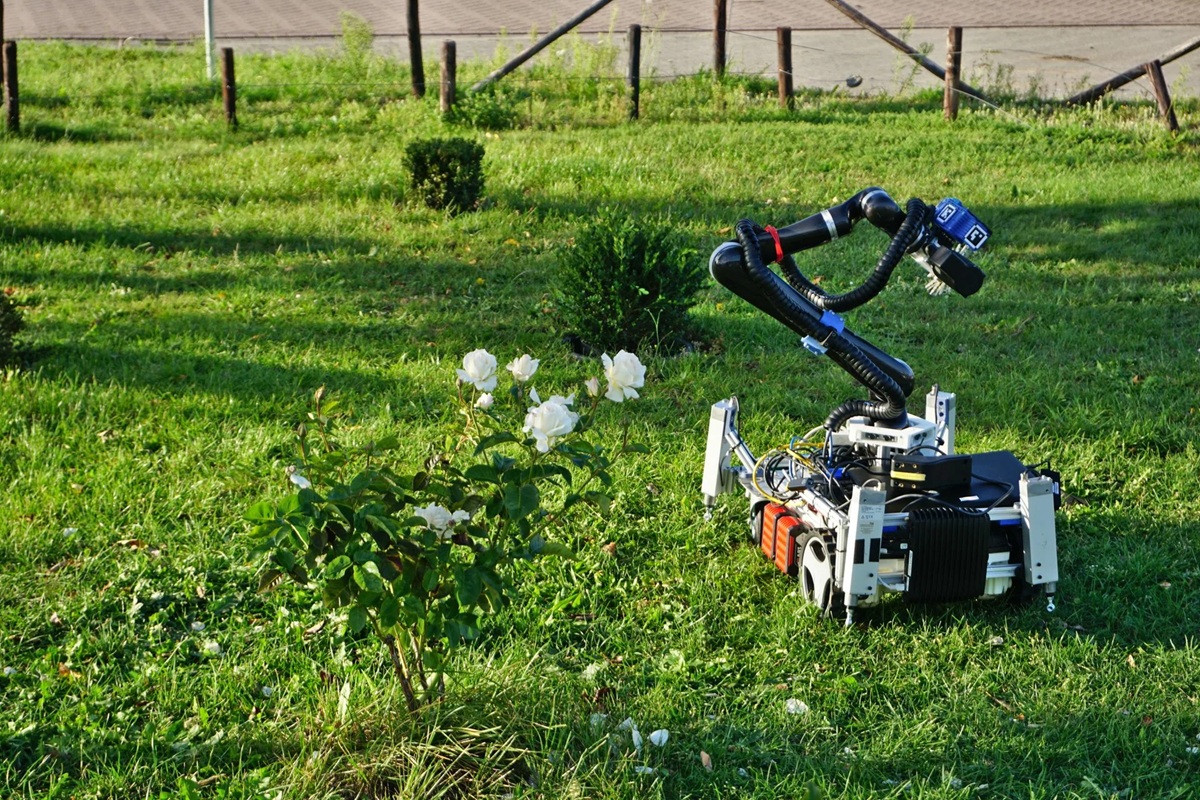
It may seem strange, but there are already robots controlled by plants. A group of researchers used a carnivorous plant to activate a robotic arm. Whenever the plant closed its leaves, detecting moisture or vibration, this natural impulse was transformed into an electrical signal that activated the mechanism. These ideas, although still in the experimental stage, open up enormous possibilities. Imagine environmental sensors that behave like natural organisms or agricultural robots capable of “feeling” the soil, reacting to drought or excess moisture.
Mushrooms: the new frontier of biotechnology
If plants can be the “muscles” of these living machines, mushrooms can be their brains. The secret lies in the mycelium, an underground network connecting fungal organisms, which some scientists compare to the natural nervous system. Researchers at the University have discovered that mycelium can transmit electrical impulses in much the same way as neurons. By reacting to environmental stimuli, they seem to learn and adapt, making them candidates for the role of biological processors. In addition, mycelium has practical advantages: it is lightweight, resistant and completely biodegradable. Today, it is already used for the production of eco-friendly materials, packaging and even building components. In the near future, we may see robots whose “bones” are made of living mycelium, capable of growing and self-regenerating.
Nature as an engineer

In essence, hybrid robotics is a powerful idea: nature is not a resource, but a partner. Instead of producing machines that compete with the environment, this discipline seeks to design systems that complement it. For this reason, many of these projects focus on sustainability. Researchers are developing robots that decompose on their own at the end of their useful life, made from plant tissues or fungal materials. Others are investigating bacteria that generate electricity from organic waste, which would allow the creation of devices that “feed” on their own environment.
Ethical and technological challenges
Not everything is so simple. Hybrid robotics raises questions that go beyond engineering. To what extent is it ethical to use living organisms for technological purposes? Where does the machine end and life begin? Experts agree that the key to the solution lies in respect: using biological capabilities without turning organisms into mere instruments. There are also important technical problems. Maintaining the vitality of biological components within a mechanical structure requires control of temperature, humidity and nutrients. In addition, natural processes are slow and unpredictable, which contrasts with the precision and speed of traditional robotics.
The future: machines that grow and feel
Despite the difficulties, the future of hybrid robotics looks exciting. It is not about creating monsters, half machine, half plant, but rather living, sustainable systems. Robots that grow, repair themselves and react naturally to the environment. Smart gardens are already being developed that use plant reactions to regulate lighting or watering, living agricultural robots that interact with crops, and even architectural structures made of mycelium, capable of absorbing CO₂ and regulating temperature.