It seems that Antarctica‘s ability to surprise scientists never ends. There are discoveries in the ice that rewrite its history, but this time, the clue was provided by fragments of amber. A group of scientists identified the fragments in various sediments on the Antarctic seabed, and they are direct evidence that millions of years ago, Antarctica was home to temperate forests and a warm climate. In other words, the landscape was green and very different from the current icy version. At least that is what the study published in the journal Antarctic Science claims. It provides new clues about the region during the Cretaceous period, about 90 million years ago. Scientists find evidence that Antarctica had forests and a warm climate. The study was published in the journal Antarctic Science. It provides new clues about the region during the Cretaceous period, about 90 million years ago.
Scientists find evidence that Antarctica had forests and a temperate climate
The discovery was made in Pine Island Bay, on the coast of the Amundsen Sea, west of Antarctica. There, scientists found several small fragments of amber, between 0.5 and 1 millimetre in size. These were formed from the resin of ancient trees that once covered the region. They are tiny, but their importance is enormous, as they represent the first confirmed amber in Antarctica. In other words, they are proof that, long before the existence of glaciers, this area was covered by humid coniferous forests.
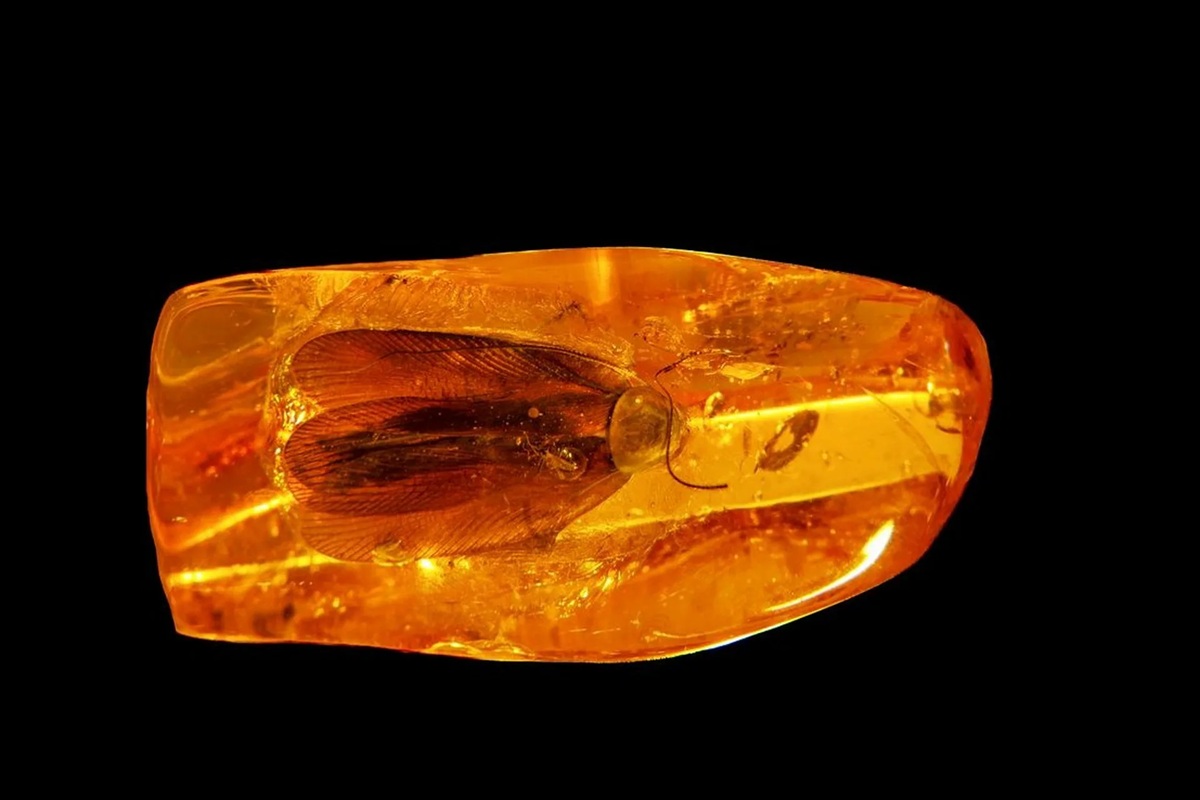
Amber is a natural time capsule. It originates when tree resin flows, hardens and traps tiny remnants of life within it: insects, pieces of bark or pollen grains. Over millions of years, this resin fossilises and preserves an intact sample of vanished ecosystems. In this case, the fragments found reveal chemical characteristics typical of conifers and textures that indicate that the trees suffered injuries and responded by producing more resin, just like today’s species.
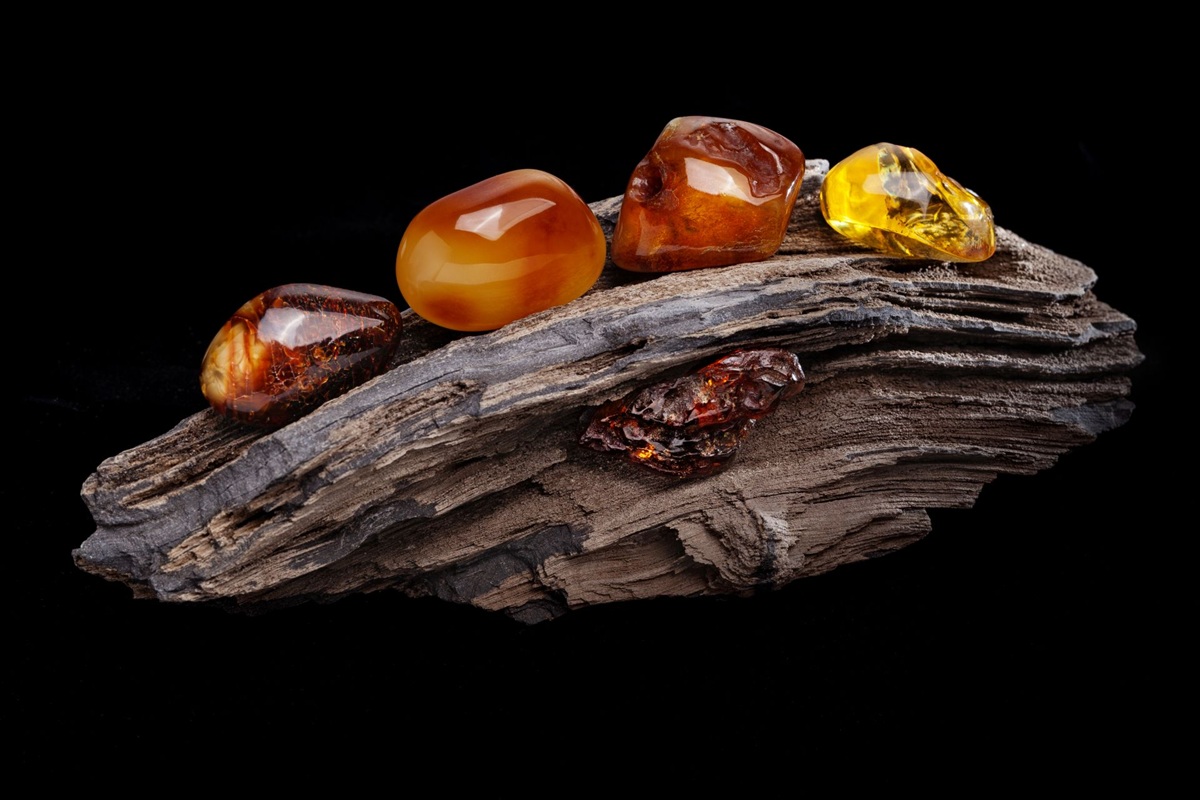
Composition of several pieces of natural amber. Various colours from transparent yellow to dark red, polished with signs of natural origin such as cavities and superficial cracks on their surfaces.
The scientific expedition to find amber in Antarctica
To reach these remains, researchers drilled into the seabed from the German icebreaker Polarstern. In the end, they drilled more than 900 metres below the ice shelf. There, they extracted a sample of about three metres of sediment containing layers of lignite, a soft coal formed from compressed peat. When analysing this material under a microscope, they detected translucent grains of fossilised resin, with curved fractures and golden reflections typical of amber.
The pieces showed signs of solidified resin after damage to the trunks, which would be evidence that the trees were in an environment where they suffered fires or insect attacks. In fact, the same deposit includes charcoal particles. This would be almost impossible without fire being a common element in that polar landscape.
The Antarctic forest that challenges the history of ice
Until now, the southernmost amber deposits came from southern Australia and New Zealand, but none were so close to the South Pole. This discovery fills that gap and confirms that 90 million years ago, Antarctica enjoyed mild, ice-free winters and lush vegetation. In fact, the study concludes that this landscape was due to high levels of carbon dioxide, which maintained a natural greenhouse effect and temperatures above zero degrees throughout the year.