
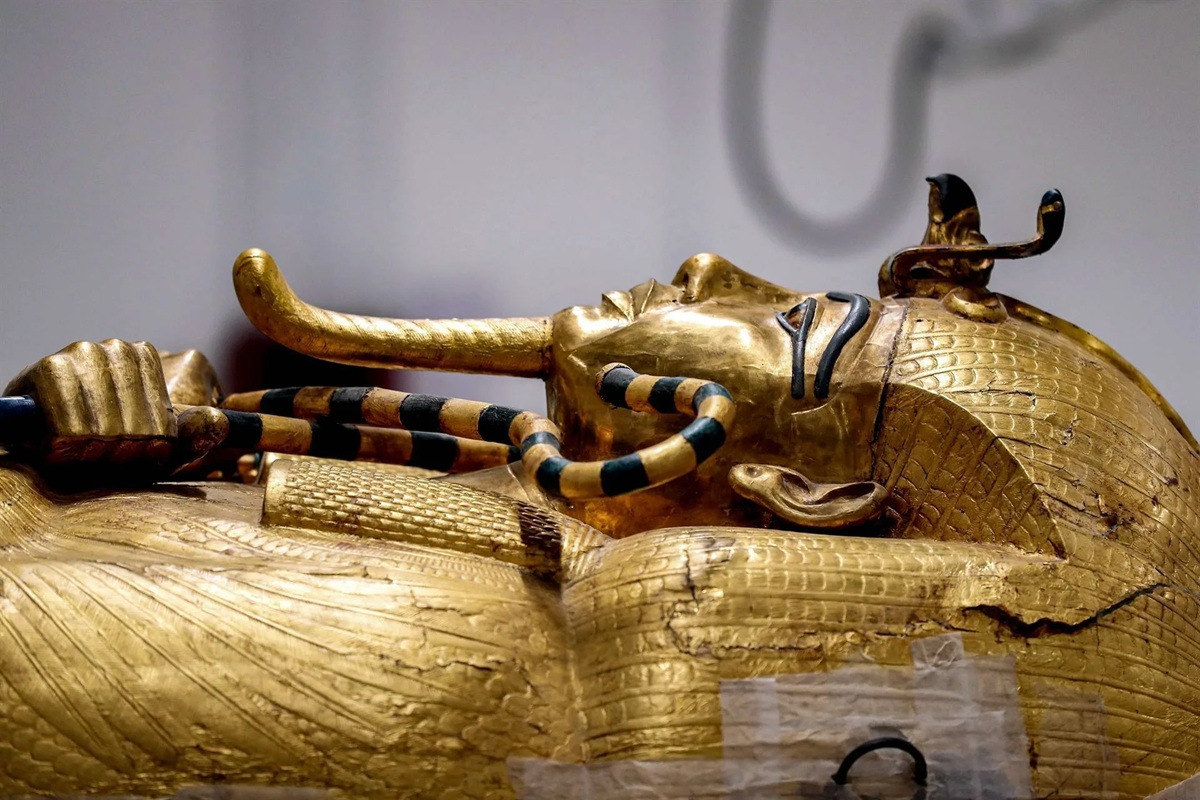
Experts warn that without containment measures, the tomb is at risk of irreversible damage It is probably the most famous tomb in the world, both for the legend behind its discovery and for its provenance. The tomb of the young pharaoh Tutankhamun — officially known by its excavation code KV62 —, excavated during the 18th Dynasty in the valley of the same name, now faces a barely visible but very serious threat: structural instability aggravated by a combination of the geology of the environment and the impact of water.
A recent study published in the journal npj Heritage Science and authored by researcher Sayed Hemeda of Cairo University reveals that the ceilings of the main chambers have ‘very low safety factors’ and extreme stresses, leaving the vault vulnerable to collapse. The authors of the study indicate that the tomb was excavated within the Esna schist formation, a particularly fragile rock that reacts adversely to water: in humid conditions, its strength and rigidity decrease dramatically.
The situation is aggravated by its location: the tomb is situated in a low-lying position, prone to flooding, and is crossed by a huge geological fault that cuts longitudinally through the antechamber and burial chamber. According to the report, episodes of heavy rainfall and sudden water flows — such as one recorded in 1994 — have caused infiltrations that not only increase internal humidity but also generate bending and twisting deformations in the ceilings. The combined effect of the weight of the upper rock (overburden) and the loss of cohesion of the rock affected by water generates a process of settlement and surface disconnection.
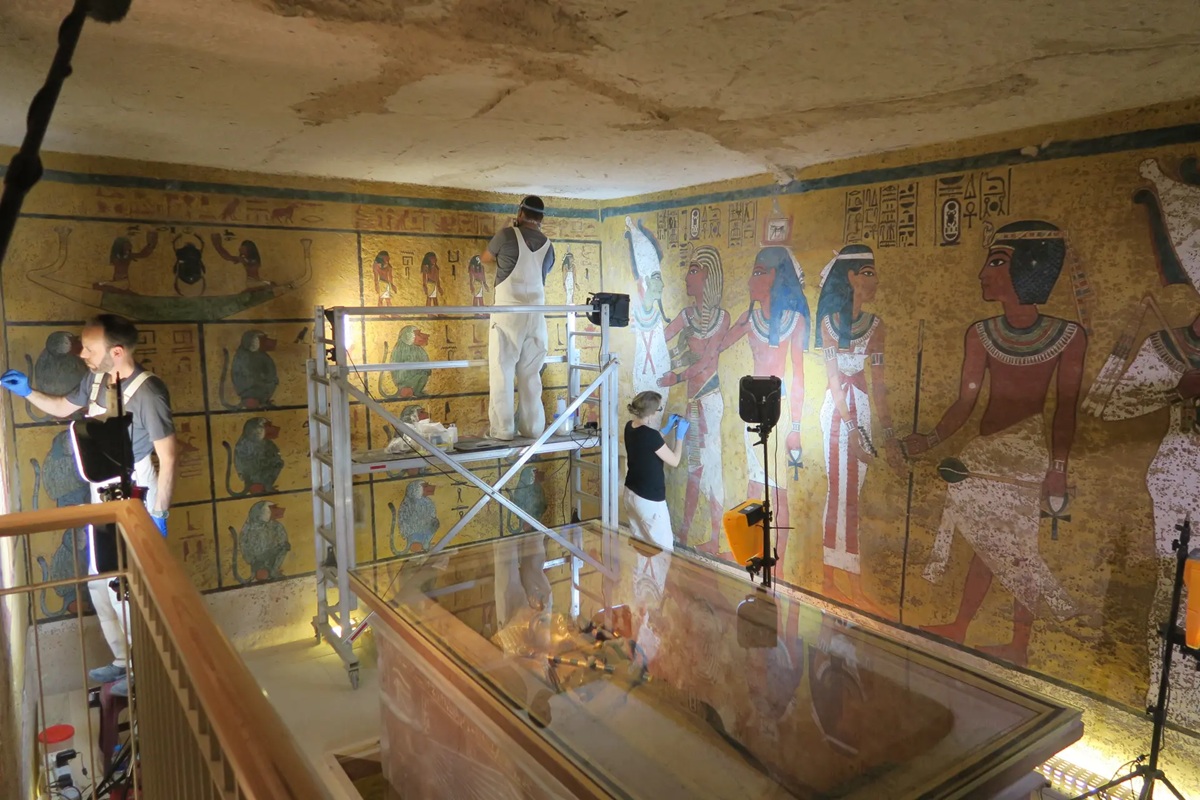
When the ceiling is under tension and the saturated rock exceeds its tensile strength, delamination of the surface layers occurs and, ultimately, compression fractures in the core of the structure. In addition, the central part of the ceiling, next to the fault, settles more quickly than the rear areas, which induces a forward sloping deformation.
Given this scenario, the researchers propose urgent intervention: they point out that, in order to preserve the monument, it is essential to reduce humidity fluctuations, control air circulation to the interior, and implement a specific reinforcement programme to stabilise the vault. In other words, without containment measures, the tomb — not only an archaeological treasure but a global symbol — is at risk of irreversible damage. To preserve the monument, it is essential to reduce humidity fluctuations
To protect the interior of the tomb, the authors emphasise that controlling both surface and underground water must be a priority. It is necessary to ensure that infiltration through cracks is blocked and that the external materials supporting the structure are consolidated. In addition, it is recommended to limit visitor exposure and modify the internal microclimate conditions to prevent humidity from increasing when doors or windows are opened. If these considerations are not followed, it is likely that travellers eager to see the most famous (though not the most impressive) tomb in the Valley of the Kings will, in the not too distant future, only be able to do so through virtual 3D tours.