

Researchers have discovered that humans can detect objects hidden under sand or other materials without touching them directly, an ability called remote touch, which is believed to be our seventh sense. A group of scientists claim that humans have a seventh sense: the ability to perceive objects hidden without touching them directly, an ability they call “remote touch”. The discovery, inspired by the ability of seabirds such as the yellow-legged sandpiper to detect prey under the sand, would add to the list of the five classic senses —touch, hearing, sight, taste and smell — and the sixth, called proprioception, which allows the brain to know the position of body parts without using sight.
First evidence of remote touch in humans
The researchers discovered this ability after conducting a comparative experiment between robots and twelve human participants, who gently moved their fingers over the sand and were able to detect a hidden cube after perceiving minimal movements on the surface. ‘This is the first time that distance touch has been studied in humans, and it changes our conception of the perceptual world (what is called the “receptive field”) in living beings, including humans,’ said Elisabetta Versace, professor of psychology and director of the Prepared Minds Lab, in a statement from Queen Mary University. Beach birds use their beaks to detect prey under the sand, a skill that humans would also have
Better performance than robots
Although the robots detected objects at a greater distance during the tests, their accuracy was lower: humans achieved 70.7% accuracy, while the robot’s tactile sensor produced numerous false positives, limiting its accuracy to 40%. This demonstrates that humans can perceive an object before seeing or touching it. Both humans and robots achieved results very close to the maximum sensitivity predicted by physical models, experts say. ‘It’s an excellent example of how psychology, robotics and artificial intelligence (AI) can be combined, demonstrating that multidisciplinary collaboration can result in both fundamental discoveries and technological innovations,’ says co-author Lorenzo Jamone, associate professor of robotics and AI at University College London.
Implications for the future of robotics and AI
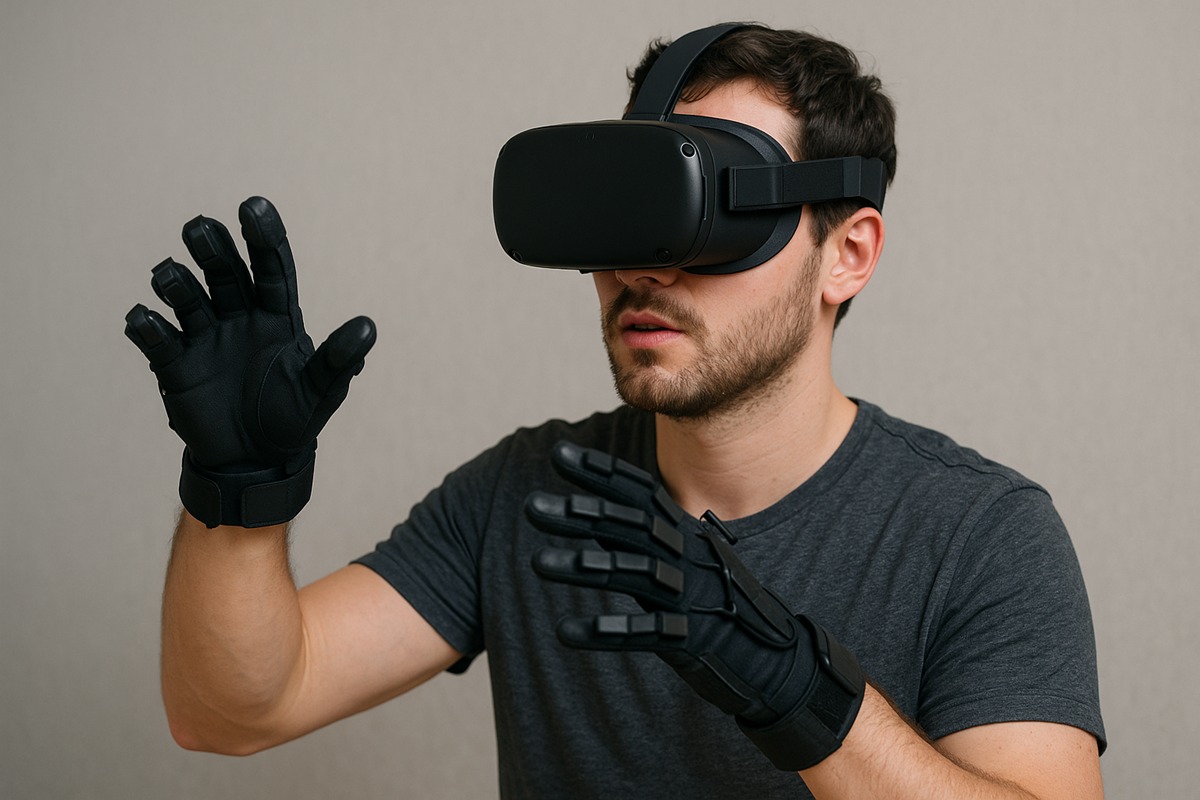
Lead author Zhengqi Chen, a PhD student in the advanced robotics laboratory at Queen Mary University, suggests that this discovery could also drive new technologies for detection in robotics. ‘This knowledge could serve as the basis for the development of advanced robots capable of performing delicate operations, such as locating archaeological artefacts without damaging them, or exploring sandy or granular terrain, such as Martian soil or the ocean floor,’ he proposes. ‘The research paves the way for the development of tactile systems that make the exploration of hidden or dangerous locations safer, smarter and more effective,’ he concludes.