
The National Institute of Industrial Technology recommends unplugging electrical appliances during storms to prevent damage from power surges and has detailed which ones should be removed from the mains in such cases With the announcement of possible electrical storms, a challenge arises for the protection of household appliances. Voltage spikes and electrical discharges caused by lightning can immediately render expensive devices unusable. Technicians and organisations such as the National Weather Service and the National Institute of Industrial Technology recommend taking action in advance and unplugging certain essential electrical appliances before the storm begins.
Which electrical appliances do they recommend unplugging during storms
Experts from the National Institute of Industrial Technology and international entities such as the National Fire Protection Association emphasise the importance of turning off certain appliances during thunderstorms. They recommend not only turning them off, but also removing the power cord and all associated connections, such as HDMI, antennas, and data cables, as these can transmit voltage spikes that damage internal components. Among the devices that require special precautions are modems, Wi-Fi routers, video game consoles, audio equipment, TV decoders, televisions, refrigerators, microwaves, dishwashers, and desktop computers. According to the INTI and the NFPA, these devices use particularly sensitive electronic boards, and their exposure to voltage variations — even during micro-cuts or sudden surges — significantly increases the risk of permanent damage, even if they are turned off.
How an electrical storm can affect a television

New generations of televisions, especially LED, QLED and OLED models, use electronic power supplies with limited tolerance to sudden voltage changes. According to data published by the National Institute of Industrial Technology, these devices can fail due to sudden voltage spikes, short circuits caused by lightning strikes on the grid, or recurring micro-cuts, even if the phenomenon occurs several kilometres away. The damage mainly affects the internal power supply or the main board, whose replacement parts can cost between 40% and 70% of the price of a new television. The installation of stabilisers or domestic UPS systems offers limited protection and, according to INTI technicians quoted by Infobae, the energy released by an atmospheric discharge usually exceeds the maximum capacity of these devices. Therefore, the only truly reliable measure is to switch off the television completely and disconnect the antenna or data cables until the storm is over.
How to prevent damage to the refrigerator
The refrigerator is also vulnerable to electrical storms. Although it has basic protections, the voltage spikes that occur when the power is restored after an abrupt outage can affect the compressor or the electronic board, which are expensive to repair. The Institute’s experts indicate that only in the case of intense and long-lasting storms is it advisable to turn it off, as food will remain at the right temperature for several hours if the door is not opened. Appliances such as washing machines and dishwashers are also on the list due to the presence of electronic boards and motors. In addition, their connection to water pipes increases the risk of indirect electrical discharge.
What precautions to take at home before storms
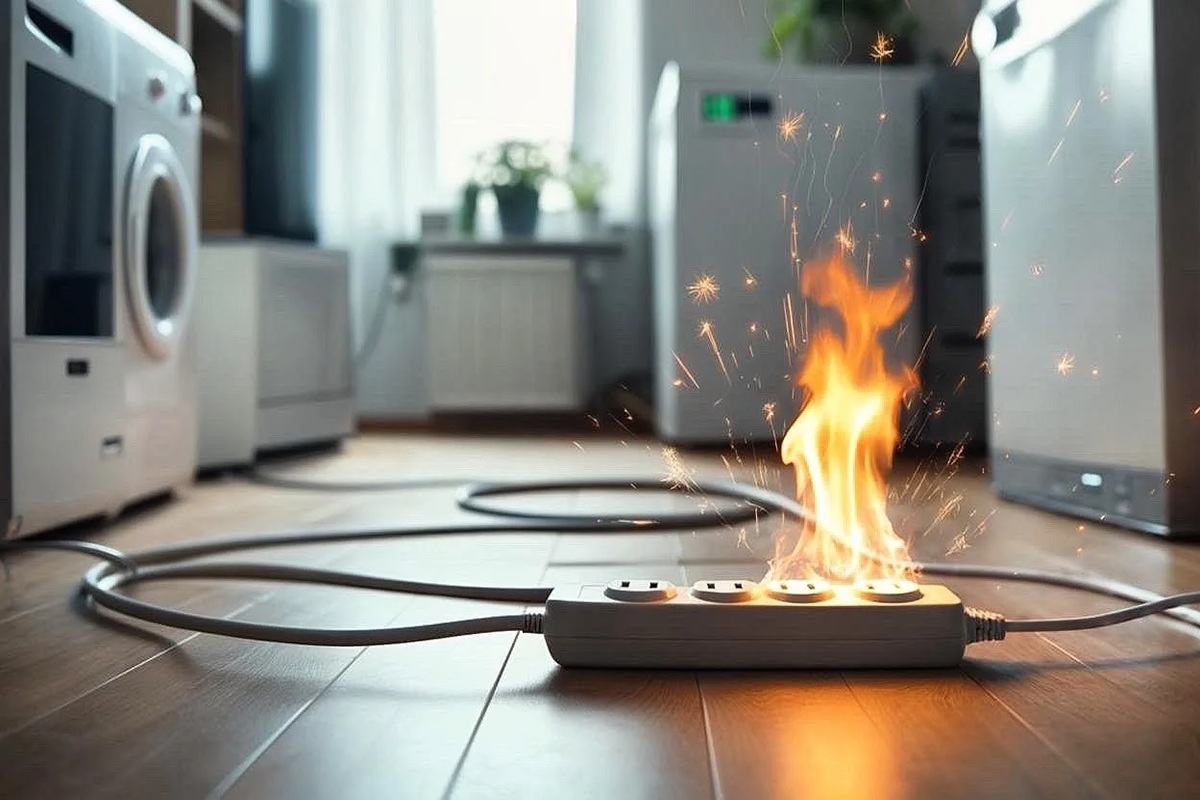
To minimise the risk of economic losses and electrical accidents, experts and organisations such as the National Meteorological Service recommend:
- Unplugging all sensitive electronic devices recommended by technicians, including televisions, computers, modems and game consoles.
- Remove antenna, cable TV and HDMI cables from equipment to prevent indirect transmission of electrical surges.
- In the case of refrigerators, keep the door closed while the power is out, only turning it off if the storm is of considerable intensity and duration.
In addition, they warn that neither domestic stabilisers nor surge suppressors offer complete protection in severe storms. Professional UPS systems and IRAM-approved protectors offer an additional barrier, but do not replace the physical disconnection of equipment.