

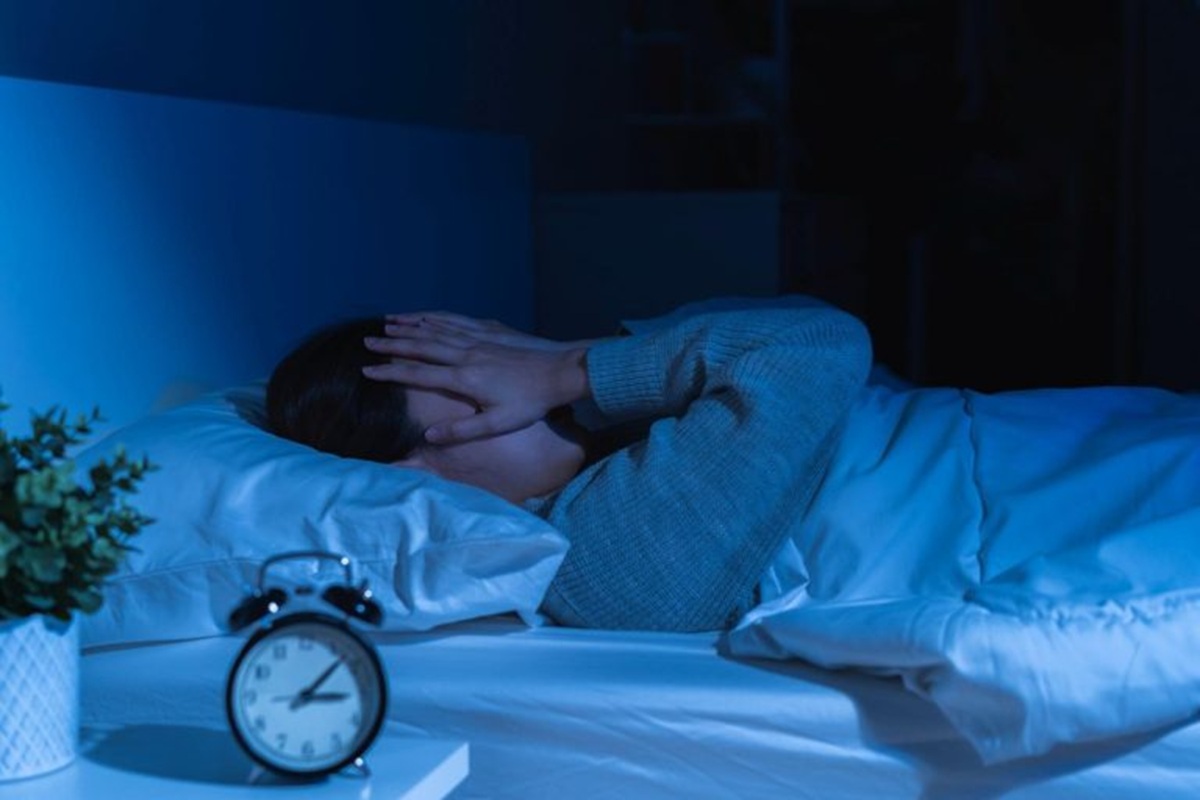
An international study cited by Muy Interesante magazine reveals that, during the early hours of the morning, people’s mental activity follows an organised and active pattern, an internal imbalance that hinders the natural transition to sleep An international study has identified that people with insomnia maintain an active and sequential pattern of thinking during the night, which makes it difficult to fall asleep. This phenomenon, linked to an imbalance in the circadian rhythms of mental activity, may explain why those who suffer from this disorder have such difficulty sleeping, according to the magazine Muy Interesante.
The experiment, conducted by a team of researchers from Australia and the United States, included 32 volunteers over the age of 55, divided into two groups: half with persistent insomnia and the other half without sleep problems. Participants remained awake for 24 hours under strictly controlled laboratory conditions, without access to external stimuli such as windows, clocks or light variations. This methodology, known as the constant routine protocol, allowed scientists to observe the internal rhythms of the body and mind without environmental interference.
Every hour, volunteers assessed their mental activity, describing whether their thoughts appeared in the form of images or words, their degree of realism, and the level of control they felt over them. The results, collected by Muy Interesante, showed that while good sleepers experienced a progressive decrease in cognitive activity during the night, insomniacs maintained high levels of thinking. Their brains showed no clear signs of being ready for night-time rest.
Changes detected in mental rhythm

The study identified three main changes in the mental rhythm of insomniacs: less variation in mental activity throughout the day, a delay of approximately six hours in peak activity compared to healthy participants, and a more sequential than repetitive thinking pattern, even during the early hours of the morning. The authors pointed out that ‘the structure of thought in insomniacs remained more sequential throughout the day and especially during the night.’
This pattern, according to statistical analysis, was not random. Insomniacs showed a greater propensity to maintain organised and linear mental activity, typical of the waking state, at times when the brain should begin to disconnect for sleep. In addition, the diurnal variation in voluntary control of thoughts was lower in this group, suggesting that their brains do not receive a clear signal that it is time to shut down. As the researchers pointed out, ‘the diurnal variation in voluntary control of thoughts was lower in insomniacs.’
These findings reinforce the cognitive hyperarousal model, a theory that argues that insomnia is not only due to excessive worries or thoughts, but to the brain’s inability to disconnect from daytime logic. The problem therefore lies in the way one thinks and the difficulty in abandoning sequential and organised thinking, which becomes an invisible obstacle to initiating sleep.
Implications for therapy and understanding insomnia
The therapeutic implications of this finding are significant. Currently, many therapies for insomnia focus on modifying sleep-related behaviours, such as establishing regular schedules, avoiding screens before bedtime, or practising relaxation techniques. However, the study suggests that it may also be necessary to intervene in the internal rhythm of thought. The researchers propose that strategies such as controlled light exposure, stable daytime routines, or mindfulness techniques could help reinforce the brain’s “switch off” signal, facilitating the transition to sleep.
These interventions could increase the amplitude of circadian mental rhythms, marking more clearly the difference between the active day and the restful night. Understanding that insomnia may have a biological basis and is not only related to bad habits helps to alleviate the emotional burden of those who suffer from it.
According to the magazine Muy Interesante, recognising the existence of a biological predisposition can reduce the guilt and anxiety associated with difficulty sleeping. The study suggests that insomnia may be related to a desynchronisation of the internal clock that regulates mental activity, which opens up new perspectives for its treatment and understanding.