
While exploring a field in Germany with a metal detector, he came across a historical relic of the Celtic people. A man from Germany became the author of one of the most surprising archaeological discoveries of the century when he discovered an authentic treasure, as it was made of gold. This discovery is 2,200 years old and belonged to the Celtic civilisation. It all started with a simple metal detector, which discovered this unusual object in a field in Leipzig, in the German region of Saxony. It is not only the surprise of the discovery that is remarkable, but also the fact that it attracted attention due to its almost perfect state of preservation.
What is this treasure like?
The treasure, found in the Gundorf field, is a small gold coin, smaller than a euro cent. Its unique design stands out for having the head of an animal, possibly a deer, engraved on the face. In addition to this detail, the coin also shows a star and a sphere. These symbols were very characteristic of the Celtic communities of northern Bohemia, which demonstrates the cultural and commercial exchange between the Celtic peoples and the inhabitants of Saxony, a region that was historically considered outside the sphere of influence of the Celts.
What was the significance of this gold coin?
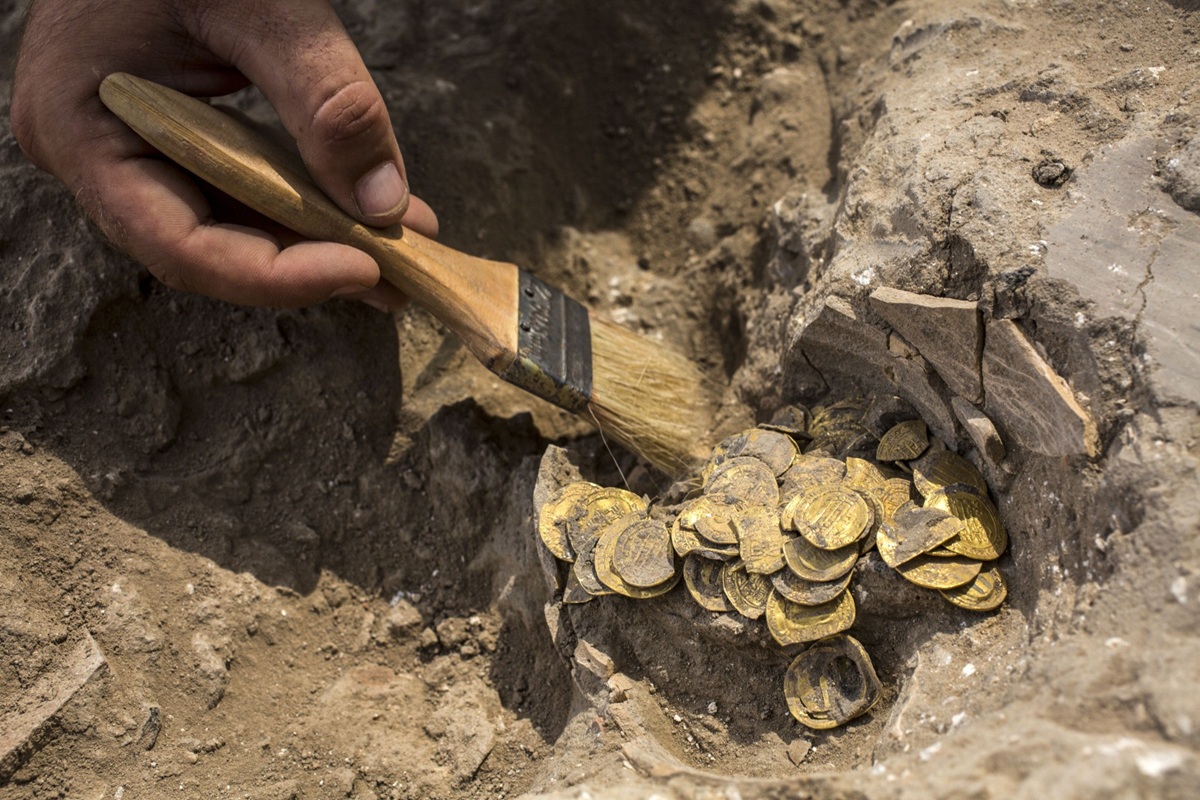
The Dresden State Administration of Archaeology presented this object, which dates from the 3rd century BC. According to experts, it was not in circulation and did not have the economic symbolism of the time. According to Saxony’s state archaeologist, Regina Smolnik, it reflected more a person’s status or was part of a “symbolic deposit belonging to a member of the local elite who traded with Celtic communities”. Saxony’s Minister of Culture and Tourism, Barbara Klepsch, added that the coin is ‘a tangible fragment of our history’ that points to a connection with ‘ancient trade and the people who lived here in their time’. At the same time, she stressed that citizen participation helps to discover and preserve cultural identity.
Antiquity of the gold coin
Prior to this discovery, the oldest coin found in Saxony was a silver quinarius, a Roman silver coin found in Zauschwitz in 2007 and dating from the early 1st century. However, the Gundorf specimen is a century older than the previous find, indicating that it is the oldest coin found in the region.
The legend of the gold coin
The coin’s domed shape classifies it as a gold coin, commonly referred to as a Regenbogenschüsselchen (rainbow bowl). This name comes from a legend that treasures could be found where the rainbow touched the earth. It was said that coins fell from the sky. This theory may have arisen when some coins appeared in the fields after being washed away by the rain.