
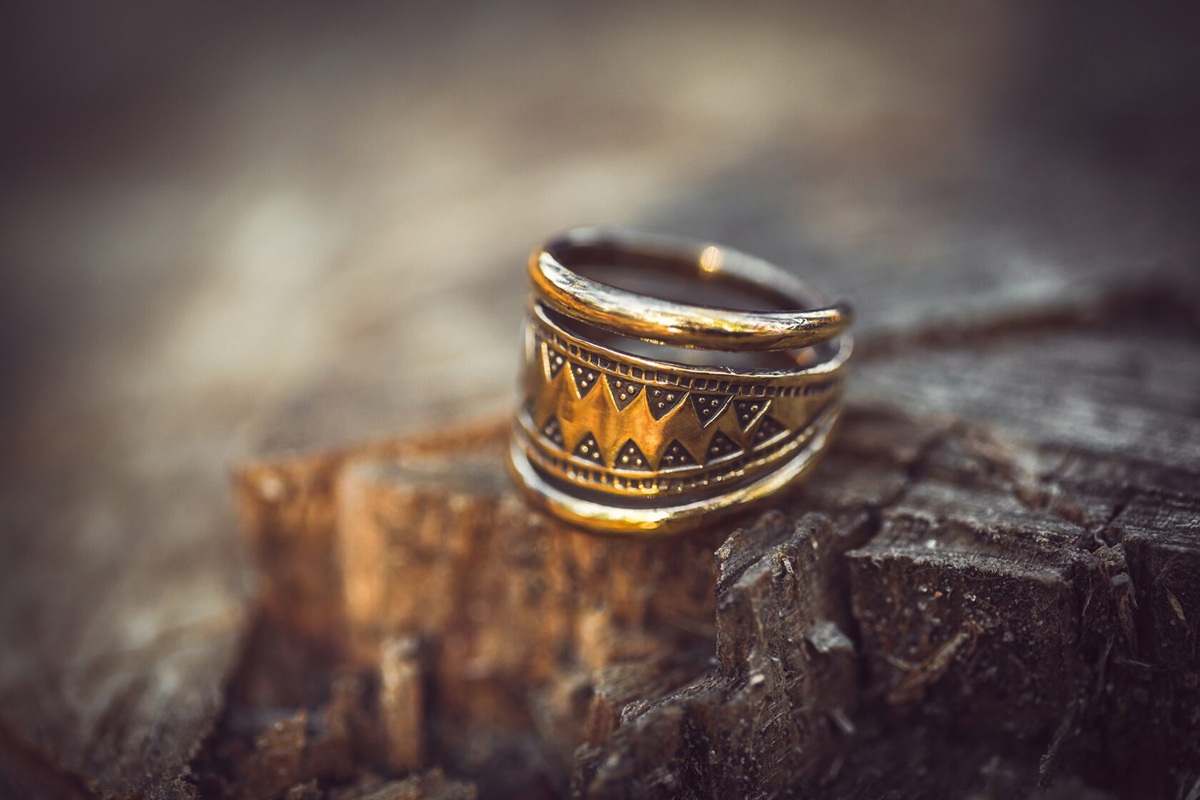
An unexpected discovery in a charity shop has put experts and students on the trail of 11 rings and two medallions, possibly dating back to medieval times The chance discovery of rings and medallions over a thousand years old in a Canadian second-hand shop has prompted an archaeological investigation and a debate on the management of cultural heritage A set of eleven rings and two medallions, which may be over a thousand years old, was inadvertently handed over to the Thrifty Boutique second-hand shop in Chilliwack, British Columbia, during the spring of 2024.
The discovery went unnoticed by staff and volunteers at the shop until a buyer, identified as an archaeologist, recognised the possible historical value of the pieces and suggested contacting experts at Simon Fraser University in Canada. From that moment on, an investigation was launched to determine the origin and history of these objects, according to Smithsonian Magazine. The donation was made by a person whose identity remains unknown and included a small box with the jewellery, labelled for sale at USD 21 each. The shop, which raises funds for the charity Chilliwack Hospice Society, did not realise the uniqueness of the items until the visiting archaeologist pointed out their possible significance. An anonymous person donated the collection without knowing its value, where it remained hidden until it was identified by an archaeologist
Scientific analysis and ethical debate about the pieces
The shop staff, following the suggestion, contacted experts at Simon Fraser University, who began an evaluation process. Preliminary analysis of the objects revealed distinctive signs pointing to ancient manufacture: the materials and manufacturing techniques coincide with those used between the 4th and 5th centuries. Sabrina Higgins, an archaeologist at the university, showed particular interest in one of the medallions, decorated with the Greek letters ‘CH’ and the Roman letter ‘RH’. As Higgins explained to Smithsonian Magazine, these characters form a Christogram, a symbol associated with Christ, which would indicate a possible provenance from the ancient Western Roman Empire.

The lack of documentation on the provenance of the jewellery initially raised ethical questions about its acceptance, given the possibility that it may have been obtained illegally before arriving at the shop. Barbara Hilden, director of the Museum of Archaeology and Ethnology, pointed out that the university usually requires precise information about the origin of objects for academic study, but on this occasion, the exceptional nature of the discovery warranted an exception: it was considered preferable to preserve the pieces in a public institution rather than allow them to be dispersed on the private market.
The authenticity of the jewellery still needs to be confirmed, as they may be counterfeits. However, even as possible reproductions, their analysis can provide relevant information about the antiques market and the methodologies that allow genuine pieces to be distinguished from imitations. The verification of the pieces and their uncertain origin raise questions about authenticity and institutional responsibility.
A new academic and museological chapter
Starting in autumn 2026, the rings and medallions will be the central theme of a new university course at Simon Fraser University. Undergraduate students will have the opportunity to investigate the history of the objects, carry out scientific and documentary analyses, and use digital technologies for their study. Higgins predicts that the process of reconstructing their origins will take at least one semester and probably longer: ‘It will take at least one semester — if not more — to reconstruct the origins of these artefacts,’ the archaeologist told Smithsonian Magazine. The course will also address the ethical and practical challenges associated with authenticating antiquities and will contribute to the creation of a new exhibition at the university museum. The permanence of these pieces over the centuries, despite the risk of loss or destruction, was considered extraordinary by the museum director. After being rescued from anonymity, the jewels begin a new stage of research and dissemination, in which their history can be explored and shared with the academic community and the public.